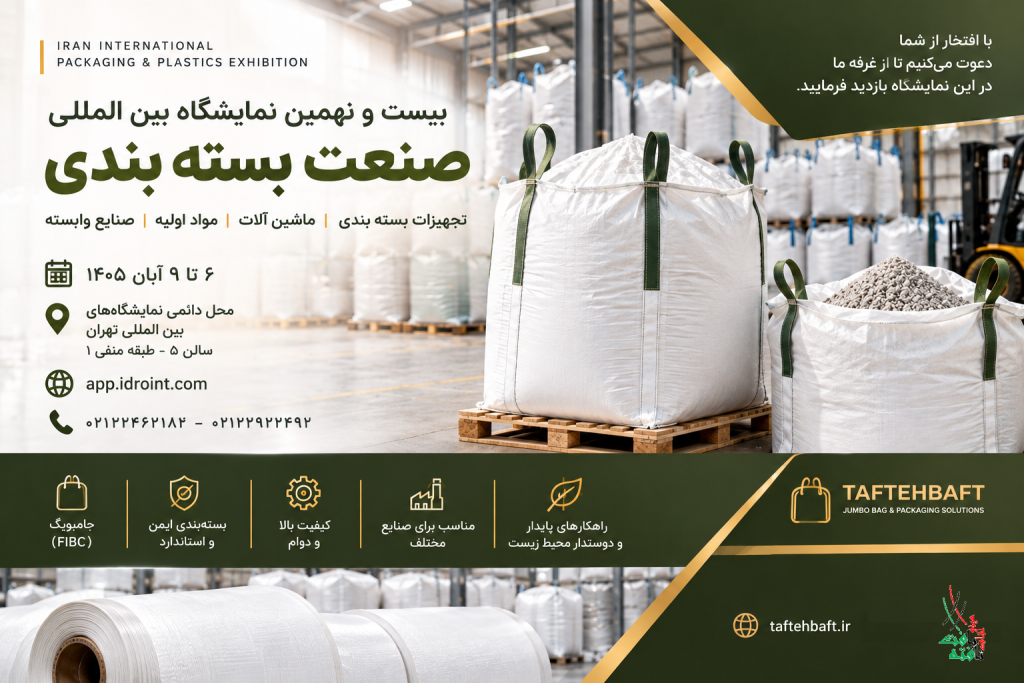

The jumbo bag price is an important consideration for manufacturers, trading companies, agricultural businesses, and industries that need to package, store, and transport bulk materials. However, there is no single price for every jumbo bag. The final cost depends on dimensions, safe working load, fabric specifications, filling and discharge options, lifting loops, inner liners, lamination, printing, and order quantity.
Before comparing prices, it is important to define your technical requirements. This guide explains the main factors affecting jumbo bag prices in 2026, compares common FIBC designs, and outlines how to request an accurate quotation.
How Is the Jumbo Bag Price Determined?
The price of a jumbo bag is generally calculated based on raw material costs, fabric consumption, manufacturing processes, and customized specifications. As a result, two bags that look similar may have different prices.
A standard bulk bag used for mineral materials, for example, may have a different production cost from an FIBC fitted with a PE liner, laminated fabric, a filling spout, or a discharge spout.
The main price factors include:
- Jumbo bag dimensions and capacity
- Fabric weight and polypropylene quality
- Top filling and bottom discharge design
- Number and design of lifting loops
- Inner liners and laminated coatings
- Product characteristics and packaging requirements
- Order quantity
- Custom printing, packaging, and delivery costs
For a meaningful comparison, make sure that the technical specifications of the products being compared are equivalent.
10 Factors That Affect Jumbo Bag Prices
1. Jumbo Bag Dimensions
Dimensions are an important factor in jumbo bag pricing. Larger bags generally require more fabric, which can increase raw material and manufacturing costs.
The dimensions should be selected according to the product’s volume, bulk density, filling process, and transportation requirements.
A larger bag may be suitable for lightweight, bulky materials, while heavy products require careful consideration of the bag’s safe working load and construction.
Buying tip: Do not choose dimensions based on appearance alone. Consider the actual volume of the material and the space required for filling, storage, and handling.
2. Capacity and Safe Working Load
The safe working load (SWL) specifies the maximum load for which a jumbo bag is designed under its intended conditions of use.
FIBCs are available in different capacities, such as 500 kg, 1,000 kg, 1,500 kg, and 2,000 kg. However, a higher required capacity does not automatically produce a fixed percentage increase in price. Dimensions, fabric specifications, design, and handling requirements also affect the cost.
Before ordering, define:
- The product weight per bag
- The required safe working load
- Product density and volume
- Lifting and handling methods
- Storage and stacking conditions
- Any applicable reuse requirements
The safety factor must not be interpreted as permission to exceed the marked safe working load.
3. Fabric Weight and Raw Material Quality
A significant part of jumbo bag manufacturing cost comes from raw materials. Many industrial FIBCs are made from woven polypropylene (PP), and the fabric specifications influence material consumption and the performance of the finished bag.
Fabric weight, commonly expressed in grams per square metre (GSM), is one useful specification. However, GSM alone is not enough to determine the overall quality or safety of a jumbo bag.
Other factors include:
- Raw material quality
- Weave consistency
- Fabric tape quality
- Stitching and seam strength
- Lifting-loop attachment points
- Suitability of the design for the intended load
When comparing quotations, request written technical specifications for both the fabric and the finished product.
4. Jumbo Bag Top Design
The top design affects filling efficiency, manufacturing requirements, and handling. It should be compatible with the product and the filling equipment.
Open-top jumbo bag: A simple design suitable for applications where material is loaded from the top.
Duffle-top jumbo bag: Includes an extended fabric skirt that can be gathered or closed after filling.
Filling-spout jumbo bag: Uses a defined inlet to support more controlled filling operations.
Customized top designs may require additional materials or manufacturing steps. Specify the required top design when requesting a quotation.
5. Jumbo Bag Bottom Design
The bottom design affects how the product is discharged. The correct option depends on the material’s flow characteristics and the available equipment.
Flat bottom: Suitable for applications that do not require a dedicated bottom discharge outlet.
Discharge-spout bottom: Includes an outlet designed to support controlled emptying.
Customized bottom: Designed for specific handling or discharge requirements.
Additional outlets, closures, and custom construction can affect fabric consumption, production time, and the final price.
6. How an Inner Liner Affects Jumbo Bag Prices
An inner jumbo bag liner is commonly made from a polymer film such as polyethylene (PE). Depending on its design, it can help reduce exposure to environmental moisture, limit contamination, or reduce the leakage of fine particles.
The cost of a liner may depend on:
- Liner material
- Film thickness
- Bag dimensions and internal volume
- Liner installation method
- Top and bottom configuration
- Product-specific requirements
Not every application needs an inner liner. Evaluate the product and storage conditions before adding one to avoid unnecessary costs.
7. Laminated Jumbo Bags and Their Cost
A laminated jumbo bag has a coating applied to the fabric. Depending on the construction and coating, lamination can help reduce moisture permeability and the passage of fine particles.
The cost may depend on:
- Coating type and quality
- Fabric surface area
- Bag dimensions
- Technical specifications
- Other customized features
Lamination and an inner liner are not the same. The right option should be selected according to the product’s protection requirements rather than price alone.
8. Lifting Loops and Handling Design
Lifting loops are designed to help raise and move jumbo bags. Their number, position, and attachment design should be compatible with the handling equipment.
Before ordering, specify:
- The required number of lifting loops
- Loop positions and design
- Forklift or crane handling requirements
- Safe working load
- Any special design or quality-control requirements
The lowest-priced design is not necessarily the best choice. Safe handling and compatibility with the equipment should remain priorities.
9. Order Quantity and Custom Printing
Order quantity can affect the unit price. For larger orders, some fixed setup costs may be distributed across more bags. However, the actual savings depend on production conditions, materials, and order specifications.
Custom printing can also affect the cost. Important considerations include:
- Number of print colours
- Print size and placement
- Design complexity
- Order quantity
- Special packaging requirements
Provide the order quantity and printing requirements when requesting a quotation.
10. Transportation, Packaging, and Delivery Costs
A supplier’s quoted price may cover only the jumbo bags or include additional costs. Clarify what is included before comparing offers.
Ask about:
- Packaging costs
- Delivery charges
- Production and delivery lead time
- Payment terms
- Minimum order quantity
- Quality inspection and product acceptance conditions
Comparing the total delivered cost is generally more useful than comparing the initial unit price alone.
Jumbo Bag Prices by Type and Specification
The cost of an FIBC depends on its design and specifications. The table below highlights common cost factors; it is not a fixed price list or a ranking from cheapest to most expensive.
| Jumbo bag type | Main cost consideration | Typical application |
|---|---|---|
| Standard jumbo bag | Dimensions, fabric, and capacity | General bulk materials |
| Filling-spout bag | Inlet design and stitching | Controlled filling |
| Discharge-spout bag | Outlet and closure design | Controlled discharge |
| Lined jumbo bag | Liner material and dimensions | Products requiring an inner layer |
| Laminated jumbo bag | Fabric coating | Applications requiring reduced permeability |
| Baffle jumbo bag | Internal panels and additional stitching | Improved shape retention and space efficiency |
| Printed jumbo bag | Artwork and printing process | Branded or labelled packaging |
To determine the actual price, specify the bag type, dimensions, capacity, and all required features.
How to Request an Accurate Jumbo Bag Price Quotation
Prepare your order details before contacting a manufacturer or supplier. A general question such as “How much does a jumbo bag cost?” is usually not enough to establish a final price.
Information Needed for a Quotation
Prepare the following details:
- Type and characteristics of the product
- Target product weight per bag
- Required dimensions
- Required safe working load
- Top and bottom design
- Inner liner or lamination requirements
- Order quantity
- Custom printing requirements
- Delivery location
- Required delivery date
Providing this information makes it easier to compare supplier quotations on a like-for-like basis.
Why Should Technical Specifications Be Finalized Before Ordering?
Changes to dimensions, fabric, top or bottom design after production has started may affect both cost and delivery time. Final specifications should therefore be documented in the quotation, purchase order, or technical agreement.
The safe working load, handling conditions, and quality requirements should also be confirmed before production begins.
How to Choose a Cost-Effective Jumbo Bag
A cost-effective jumbo bag is not necessarily the cheapest bag available. It is a bag that meets the actual packaging requirements at a reasonable total cost.
To make a better decision:
- Select capacity according to the product’s actual weight.
- Avoid unnecessary features.
- Match the top and bottom design to the filling and discharge equipment.
- Add a liner or lamination only when required.
- Compare quotations using the same technical specifications.
- Consider construction quality and safety alongside price.
- Include packaging and delivery costs in your comparison.
For products with special requirements, such as moisture sensitivity or controlled discharge, discuss the appropriate design with the supplier before placing an order.
Jumbo Bag Price, Quality, and Safety
A low price does not automatically mean a good purchase. The jumbo bag must be suitable for the intended load, construction requirements, and handling method.
Review the written specifications, product traceability, usage instructions, and available quality-control documentation. Where applicable standards are required, verify compliance through relevant documentation.
Do not use a damaged jumbo bag or one with unknown specifications without an appropriate assessment.
Ordering Jumbo Bags from TaftehBaft
If you need jumbo bags for industrial, agricultural, or raw-material packaging, begin by defining the technical requirements. Once the dimensions, capacity, top and bottom design, and liner or lamination requirements are clear, it becomes easier to request a suitable quotation.
Read our Jumbo Bag Guide to learn about different FIBC types and applications. You can also consult our Jumbo Bag Buying Guide: 10 Important Tips Before Ordering to prepare your specifications before requesting a price.
To request a jumbo bag quotation, prepare the product details, required capacity, dimensions, and order quantity so the supplier can assess the cost more accurately.
Frequently Asked Questions About Jumbo Bag Prices
How much do jumbo bags cost in 2026?
Jumbo bag prices depend on dimensions, capacity, fabric specifications, top and bottom design, liners, lamination, order quantity, and delivery costs. Accurate pricing requires defined order specifications.
How much does a 1,000 kg jumbo bag cost?
The price of a 1,000 kg jumbo bag depends on its design and technical specifications. Bags with the same nominal capacity may have different prices because of differences in dimensions, fabric, liners, or construction.
Are jumbo bags cheaper when ordered in bulk?
Larger orders may reduce the unit cost, depending on production conditions, raw materials, design, and order size. Request written quotations for different quantities to compare the options.
Is a lined jumbo bag more expensive than a standard bag?
Adding an inner liner generally increases material and production costs. The actual difference depends on liner material, thickness, dimensions, and bag design.
What factors increase jumbo bag prices?
Larger dimensions, fabric specifications, higher capacity requirements, customized designs, liners, lamination, printing, and special requirements can affect the price.
What information is needed to obtain an accurate quotation?
The product type, target weight, dimensions, safe working load, top and bottom design, liner or lamination requirements, order quantity, and delivery location are among the most important details.
Conclusion
Jumbo bag prices in 2026 depend on a combination of technical and commercial factors. Dimensions, capacity, fabric, top and bottom design, liners, lamination, printing, and order quantity all influence the final cost.
Define your packaging requirements before requesting quotations, and compare suppliers using consistent specifications. This approach helps you manage costs while selecting an FIBC that suits your product and operating conditions.