
Introduction
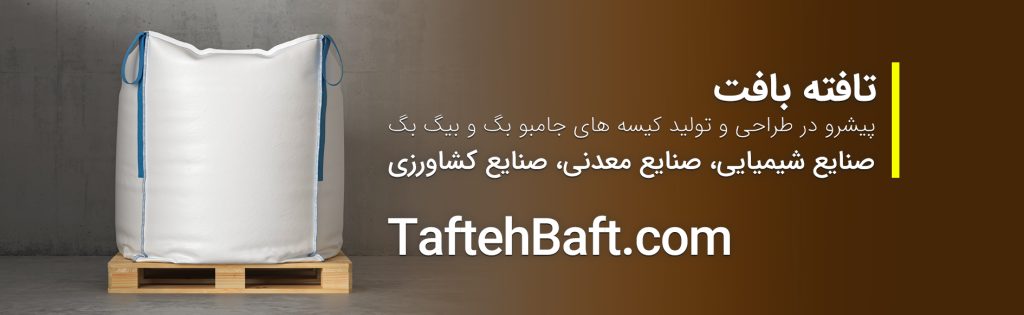
Jumbo bags, also known as Big Bags or Flexible Intermediate Bulk Containers (FIBCs), are widely used industrial packaging solutions designed for storing, handling and transporting bulk materials across various industries. One of the most important components of these bags is the fabric used to manufacture their main body.
The quality of jumbo bag fabric directly affects the bag’s strength, load-bearing capacity, tear resistance and service life. Therefore, selecting suitable raw materials and maintaining proper fabric manufacturing standards are essential.
But what is jumbo bag fabric made of? What are the differences between various fabric types? How does GSM affect the quality of a jumbo bag, and which properties should be considered when purchasing this material?
In this article, we explore the materials, structure, types and key characteristics of jumbo bag fabric in detail.
1. What Is Jumbo Bag Fabric?
Jumbo bag fabric is an industrial woven textile typically manufactured from polypropylene (PP) tapes. Due to its relatively low weight, good mechanical strength and ability to be produced in different dimensions, it is one of the most widely used materials in manufacturing large industrial bags, also known as FIBCs.
During the manufacturing process, polypropylene raw materials are converted into narrow plastic strips known as tapes. After preparation, these tapes are woven together in two directions, known as warp and weft, using industrial weaving machines to create the finished fabric.
The resulting fabric is then cut into specific dimensions to manufacture the main body, side panels, bottom and other required components of jumbo bags.
The main properties of jumbo bag fabric include:
- Good resistance to tensile forces and mechanical pressure
- Relatively low weight compared with its strength
- Availability in different GSM specifications
- Suitable flexibility for packaging bulk materials
- Easy sewing and conversion into different types of jumbo bags
- Compatibility with protective coatings
- Possibility of manufacturing with virgin polypropylene or suitable recycled material blends, depending on the application
2. What Material Is Jumbo Bag Fabric Made Of?
The primary raw material used in manufacturing many types of jumbo bag fabric is polypropylene (PP).
Polypropylene is one of the most widely used polymers in the packaging industry. Its suitable physical and mechanical properties make it particularly useful for manufacturing plastic woven products.
Why Is Polypropylene Used to Manufacture Jumbo Bag Fabric?
Polypropylene is commonly used in jumbo bag manufacturing for several important reasons:
1. Lightweight: Polypropylene fabric is relatively lightweight compared with many industrial materials, helping reduce the overall weight of packaging.
2. Mechanical Strength: Properly designed and manufactured polypropylene tapes can provide good resistance to tensile forces.
3. Moisture Resistance: Polypropylene is naturally hydrophobic and absorbs very little water. However, uncoated woven fabric is not necessarily waterproof because water can pass through the openings between warp and weft tapes.
4. Processability: Polypropylene can be processed into plastic tapes and converted into industrial woven fabric.
5. Cost Efficiency: Its suitability for mass production and the ability to control technical specifications make polypropylene an economical choice for industrial packaging applications.
3. Types of Jumbo Bag Fabric Based on Structure and Coating
Jumbo bag fabrics can be classified into several categories according to their weaving structure and surface coating. The appropriate type depends on the intended application, the material being packed and the required level of protection.
3.1. Uncoated Jumbo Bag Fabric
Uncoated fabric is manufactured from woven polypropylene tapes without an additional surface coating.
Because small openings remain between the warp and weft tapes, air can pass through the fabric.
Key Features:
- Simple and lightweight structure
- Air permeability
- Good flexibility
- Generally lower manufacturing costs than coated fabrics
- Suitable for applications that do not require additional surface protection
Applications:
Packaging certain minerals, industrial products and granular materials that do not require special protection against moisture or the escape of fine particles.
3.2. Laminated Jumbo Bag Fabric
Laminated fabric consists of woven polypropylene fabric covered with a thin polymer layer, usually polypropylene-based.
This additional layer helps reduce moisture penetration and the escape of fine particles through the fabric openings.
Key Features:
- Reduced moisture penetration through the fabric surface
- Reduced leakage of fine particles through the weave
- Relatively smoother surface
- Improved protection of bag contents under suitable conditions
- Suitable for packaging materials requiring additional protection
Applications:
Packaging powdery materials, chemical products, certain minerals and other products that require increased protection against environmental factors.
It is important to note that lamination alone does not make a jumbo bag completely waterproof. Seams, stitching and the overall bag construction must also be designed according to the required level of protection.
3.3. Coated Jumbo Bag Fabric
Coated fabric refers to woven fabric with an additional polymer layer applied to its surface to improve its protective properties.
In the FIBC industry, the term “coated fabric” is often used to describe laminated fabric as well. However, the coating material and application method may vary.
Key Features:
- Reduced moisture penetration
- Reduced dust and fine-particle leakage through fabric openings
- Better protection against environmental contamination
- Potential improvement in surface properties
Applications:
Used for packaging products that are sensitive to moisture, contamination or the leakage of fine particles.
3.4. UV-Resistant Jumbo Bag Fabric
Prolonged exposure to sunlight and ultraviolet (UV) radiation can gradually degrade polypropylene and reduce its mechanical strength.
To improve the fabric’s resistance to sunlight, UV stabilizers can be incorporated into the polymer formulation during manufacturing.
Key Features:
- Slower degradation caused by ultraviolet radiation
- Helps maintain the fabric’s mechanical properties during outdoor exposure
- Improved durability under suitable storage and usage conditions
- Suitable for applications where bags are exposed to sunlight
The level of UV resistance depends on the type and concentration of stabilizers, raw material quality, and the duration and intensity of UV exposure.
4. What Is GSM in Jumbo Bag Fabric and Why Is It Important?
One of the most important technical specifications of jumbo bag fabric is its GSM.
GSM stands for Grams per Square Meter and indicates the weight of one square meter of fabric in grams.
For example, if a fabric has a GSM of 180 g/m², each square meter of that fabric weighs approximately 180 grams.
Does Higher GSM Mean Better Quality?
Not necessarily.
A higher GSM may indicate that more material has been used per unit area, but fabric quality is not determined by weight alone.
Other important factors also affect fabric performance:
- Quality of polypropylene raw materials
- Strength of the woven tapes
- Uniformity of the tapes
- Warp and weft weave density
- Quality of the weaving process
- Stitching quality and final jumbo bag design
Therefore, GSM should always be evaluated alongside other technical specifications when assessing fabric quality.
What Is the Appropriate GSM for Jumbo Bag Fabric?
The appropriate GSM depends on the bag’s load capacity, design, type of contents and required safety factor.
For this reason, there is no single GSM value suitable for every type of jumbo bag.
To make the right selection, manufacturers and buyers should evaluate fabric specifications, tape strength, weave structure and mechanical test results.
5. What Is the Weave Density of Jumbo Bag Fabric?
Weave density is another important factor that determines the properties of jumbo bag fabric.
Woven fabrics consist of two sets of tapes:
- Warp: Tapes running along the length of the fabric.
- Weft: Tapes running across the width of the fabric.
Weave density refers to the number of warp and weft tapes within a specified unit of fabric length or width.
Changes in weave density can influence several fabric properties, including:
- Tensile strength
- Dimensional stability
- Fabric porosity
- Overall fabric weight
- Performance under applied mechanical forces
Higher weave density does not always mean better quality. It must be properly matched with tape specifications, GSM and the intended application.
6. Differences Between Virgin and Recycled Jumbo Bag Fabric
One important consideration when selecting raw materials for jumbo bags is whether virgin or recycled polypropylene is used.
Jumbo Bag Fabric Made from Virgin Materials
This type of fabric is manufactured using virgin polypropylene raw materials.
Advantages:
- Better control over raw material quality
- Greater potential for consistent mechanical properties
- Suitable for applications with specific technical requirements
- More precise control over the manufacturing formulation
Jumbo Bag Fabric Made from Recycled Materials
In this type of fabric, some or all of the raw material is supplied from recycled polypropylene.
Advantages:
- Reuse of polymer materials
- Reduced consumption of virgin resources
- Potential reduction in raw material costs under certain conditions
- Contribution to reducing plastic waste
However, the quality of recycled materials depends on their source, recycling method, contamination level and process control.
Using recycled materials without evaluating their mechanical properties and conducting the necessary tests is not recommended for jumbo bags intended to carry heavy or sensitive loads.
7. How Is Jumbo Bag Fabric Manufactured?
The manufacturing of jumbo bag fabric involves several main stages, each of which affects the quality of the final product.
Stage 1: Raw Material Preparation
At this stage, polypropylene granules are fed into the production line. The required raw materials and additives are selected and prepared according to the product specifications.
Stage 2: Polypropylene Tape Extrusion
- The polypropylene granules are melted in an extrusion machine and converted into a thin plastic film or sheet.
- The film is then slit and stretched to produce narrow, strong polypropylene tapes.
- The stretching process improves molecular orientation and enhances the mechanical properties of the tapes.
Stage 3: Fabric Weaving
The manufactured tapes are transferred to industrial weaving machines.
During this stage, the warp and weft tapes are interlaced in a regular pattern to form the woven fabric structure.
Stage 4: Lamination or Coating
If coated fabric is required, an additional polymer layer is applied to the surface of the woven fabric.
This stage is important for reducing moisture penetration and preventing fine particles from escaping through the fabric openings.
Stage 5: Cutting and Preparation
The finished fabric is cut according to the dimensions and design specifications of the jumbo bag.
The cut pieces are then prepared for sewing the bag body, bottom and other components.
Stage 6: Sewing and Jumbo Bag Manufacturing
Finally, the fabric panels are sewn together. Components such as lifting loops, filling spouts, discharge spouts and other required accessories are added to complete the jumbo bag.
8. How Can You Evaluate the Quality of Jumbo Bag Fabric?
Visual inspection or checking fabric thickness alone is not sufficient to determine its quality.
Some of the most important technical specifications and quality tests include:
8.1. Tensile Strength Test
This test measures the force required to stretch and break a fabric sample.
Tensile strength should be evaluated in both the warp and weft directions because the fabric may not perform equally in both directions.
8.2. Tear Resistance Test
This test evaluates the fabric’s resistance to the propagation of an existing tear.
Good tear resistance is important for preventing bag damage during handling and transportation.
8.3. GSM Test
In this test, a sample with a specified surface area is weighed to determine the fabric’s GSM.
8.4. Weave Density Inspection
The number of warp and weft tapes per specified unit is measured to evaluate weave density and uniformity.
8.5. UV Resistance Test
When jumbo bags are intended for outdoor applications, the fabric’s resistance to ultraviolet radiation should be evaluated using an appropriate testing method.
8.6. Stitching Quality Inspection
In addition to fabric quality, the strength of panel connections and body stitching is extremely important.
The overall performance of a jumbo bag depends on the combined quality of its fabric, lifting loops, stitching and design.
9. What Factors Should Be Considered When Choosing Jumbo Bag Fabric?
Selecting the right fabric requires considering the type of product being packed and the conditions under which the bag will be used.
The most important factors include:
1. Product Weight: The bag’s loading capacity and the forces applied to its body must be considered during fabric design.
2. Type of Contents: Powdery, granular and pelletized materials have different requirements in terms of fabric structure and protection.
3. Environmental Conditions: Moisture, sunlight, temperature and storage conditions influence the choice of fabric.
4. Need for Protective Coating: Some products require or benefit from laminated fabric or an internal liner.
5. Required Strength: Tensile strength, tear resistance and tape quality must match the intended application.
6. Industrial Application: Jumbo bags used in petrochemical, agricultural, mining and food industries may require different technical specifications.
10. What Is the Difference Between Jumbo Bag Fabric and an Inner Liner?
One common misunderstanding about jumbo bag construction is treating the main fabric and the inner liner as the same component.
Jumbo bag fabric is generally manufactured from woven polypropylene tapes. Its primary function is to form the bag’s structure and withstand mechanical forces.
In contrast, an inner liner is usually manufactured from polyethylene (PE) film and placed inside the bag.
Main Differences:
| Property | Jumbo Bag Fabric | Inner Liner |
|---|---|---|
| Common Material | Woven polypropylene | Polyethylene film |
| Structure | Woven warp and weft tapes | Polymer film |
| Main Function | Forms the bag body and bears mechanical loads | Provides an internal protective barrier |
| Mechanical Strength | Depends on design and weave structure | Depends on film thickness and material |
| Application | Manufacturing the main jumbo bag body | Protection against moisture and contamination |
These two components can be used together to provide both mechanical strength and the required protection for the packaged material.
11. Important Tips When Purchasing Jumbo Bag Fabric
If you are planning to purchase jumbo bag fabric or order custom jumbo bag manufacturing, consider the following points before making your decision:
- Type of raw materials used in fabric production
- Fabric GSM and technical specifications
- Tensile strength in both warp and weft directions
- Weave density and uniformity
- Type of coating or lamination
- Level of UV resistance
- Cutting and stitching quality
- Quality control and test results
- Compatibility of the fabric with the bag’s load capacity and intended application
It is also advisable to obtain the product’s technical specifications in writing from the manufacturer. This makes it easier to compare the quality and performance of different products.
Conclusion
Jumbo bag fabric is one of the most important components of industrial bulk bags and is generally manufactured from woven polypropylene tapes.
Raw material quality, GSM, weave density, tape strength, protective coatings and mechanical resistance are among the main factors affecting fabric performance.
When selecting suitable fabric, buyers should not focus solely on thickness or weight. Instead, they should evaluate the complete set of technical specifications, operating conditions and the required load capacity of the jumbo bag.
Using high-quality fabric and a design appropriate for the intended application can improve transportation safety, reduce packaging damage and enhance overall jumbo bag performance.
Frequently Asked Questions About Jumbo Bag Fabric
1. What material is jumbo bag fabric made of?
Jumbo bag fabric is generally manufactured from polypropylene (PP) tapes woven together in warp and weft directions.
2. What is GSM in jumbo bag fabric?
GSM stands for Grams per Square Meter. It indicates the weight of one square meter of fabric in grams and is an important specification for evaluating jumbo bag fabric.
3. Is jumbo bag fabric waterproof?
Polypropylene is naturally hydrophobic, but uncoated woven fabric is not completely waterproof because water can pass through the openings between the warp and weft tapes. Laminated fabric or an internal liner can be used to reduce water penetration.
4. What is the difference between laminated and uncoated jumbo bag fabric?
Laminated fabric has an additional polymer coating that covers the openings in the weave and helps reduce moisture penetration and fine-particle leakage. Uncoated fabric does not have this additional layer.
5. Does higher GSM mean greater fabric strength?
No. Higher GSM alone does not guarantee greater strength. Raw material quality, tape strength, weave density and manufacturing processes also play important roles in determining fabric resistance.
6. Is virgin or recycled jumbo bag fabric better?
The choice between virgin and recycled materials depends on the intended application, technical requirements and material quality. For sensitive applications and heavy loads, the mechanical properties and test results of the finished product should be carefully evaluated.
7. Is jumbo bag fabric resistant to sunlight?
Polypropylene is vulnerable to prolonged ultraviolet radiation. Using UV stabilizing additives can improve the fabric’s resistance to sunlight.
8. What factors determine the quality of jumbo bag fabric?
Raw material quality, GSM, weave density, tape strength, tensile resistance, tear resistance and manufacturing quality are among the most important factors determining fabric quality.