
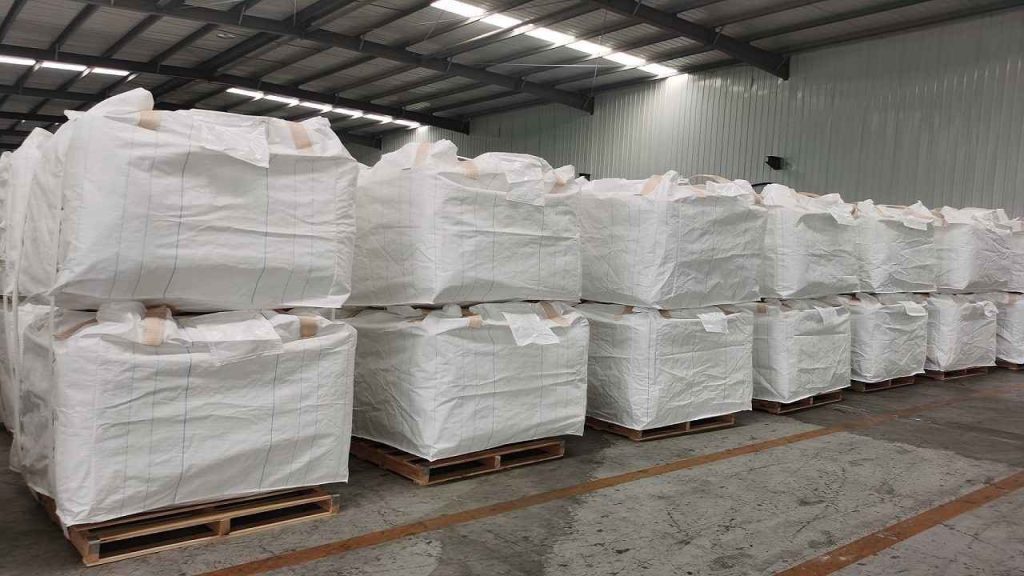
Jumbo Bags, also known as Big Bags or Flexible Intermediate Bulk Containers (FIBC), are widely used industrial packaging solutions designed for transporting and storing bulk materials. Due to their high load capacity, flexibility, and cost efficiency, Jumbo Bags have become an essential part of modern logistics and supply chains.
With the wide variety of Jumbo Bag types available on the market, choosing the right Big Bag plays a critical role in ensuring safety, protecting material quality, and reducing transportation costs. In this comprehensive guide, we explore the different types of Jumbo Bags and their specific applications in various industries.
What Is a Jumbo Bag and Why Is It Important?
A Jumbo Bag (Big Bag) is a large industrial container made from woven polypropylene fabric. These bags are designed to carry bulk materials with capacities typically ranging from 500 kg to 2000 kg.
Key Advantages of Jumbo Bags
High load-bearing capacity
Easy handling and transportation
Reduced packaging costs
Minimal material loss
Suitable for long-term storage
Thanks to these advantages, Big Bags are widely used across construction, agriculture, chemicals, food, and mining industries.
Classification of Jumbo Bags
Jumbo Bags can be categorized based on several factors, including:
Structural design
Top and bottom configuration
Safety and anti-static properties
Type of material and inner lining
Industry-specific applications
Below, we review the most common and important types of Big Bags.
Standard Jumbo Bag (Standard Big Bag)
Features
No inner liner or lamination
Simple and economical design
Most commonly used Big Bag type
Applications
Cement
Sand and gravel
Fertilizers
Minerals and aggregates
This type of Jumbo Bag is ideal for non-sensitive materials and is popular due to its affordability and versatility.
Laminated Jumbo Bag
Features
Laminated outer surface
Protection against moisture and dust
Prevents leakage of fine particles
Applications
Flour and food powders
Chemical powders
Moisture-sensitive materials
Laminated Big Bags are recommended when additional environmental protection is required.
Jumbo Bag with Inner Liner (Liner Big Bag)
Features
Equipped with a polyethylene inner liner
High hygiene level
Enhanced protection against air and humidity
Applications
Food industry
Pharmaceutical products
Sensitive chemical materials
Liner Big Bags are commonly used when product purity and contamination prevention are critical
Anti-Static Jumbo Bags (FIBC Types A, B, C, and D)
Anti-static Jumbo Bags are designed for hazardous environments and are divided into four main categories:
Type A
No anti-static protection
Suitable for non-flammable materials
Type B
Reduces static discharge
Suitable for dry powders
Type C (Conductive Big Bag)
Requires grounding during use
Suitable for flammable environments
Type D
Provides static dissipation without grounding
Highest level of safety
Applications
Petrochemical industry
Flammable powders
ATEX-rated environments
Single-Use vs. Multi-Use Jumbo Bags
Single-Use Jumbo Bags
Lower initial cost
Ideal for export and one-way transport
Limited lifespan
Multi-Use Jumbo Bags
Higher durability
Designed for repeated use
Cost-effective in long-term operations
Choosing between these Big Bag types depends on logistics strategy and operational frequency.
Jumbo Bags by Lifting Loop Design
Four-Loop Jumbo Bags
Most common design
Excellent load balance
Compatible with forklifts and cranes
Single-Loop Jumbo Bags
Easy handling
Limited applications
Two-Loop Jumbo Bags
Space-saving design
Suitable for specific handling systems
Jumbo Bags by Top Construction
Open Top Jumbo Bag
Fast and easy filling
Suitable for coarse materials
Duffle Top Jumbo Bag
Improved filling control
Suitable for powders
Spout Top Jumbo Bag
Dust-free filling
Enhanced safety
Jumbo Bags by Bottom Construction
Flat Bottom Jumbo Bag
Simple and economical
Suitable for manual unloading
Discharge Spout Bottom
Controlled discharge
Reduces material waste
Conical Bottom Jumbo Bag
Complete and fast discharge
Ideal for production lines
Applications of Jumbo Bags Across Industries
Construction Industry
Cement
Lime
Gypsum
Oil, Gas, and Petrochemical Industry
Chemical powders
Catalysts
Agriculture
Grains
Fertilizers
Animal feed
Food Industry
Sugar
Flour
Starch
Mining and Mineral Processing
Ores
Mineral concentrates
Fine powders
Difference Between Jumbo Bag and Big Bag
There is no technical difference between Jumbo Bag and Big Bag. Both terms refer to the same type of bulk packaging.
The term Big Bag is more commonly used in international markets, while Jumbo Bag is widely used in regional and local markets.
How to Choose the Right Jumbo Bag
When selecting the appropriate Big Bag, consider the following factors:
Type of material (powder, granules, chemicals)
Load weight
Environmental conditions
Safety and anti-static requirements
Number of reuse cycles
Choosing the right Jumbo Bag ensures safety, efficiency, and cost optimization.
FAQ
Conclusion
Understanding the types of Jumbo Bags and their applications is essential for optimizing bulk packaging operations. Selecting the correct Big Bag improves safety, reduces losses, and enhances logistical efficiency.